
From registering the company to structuring contracts and advising on tax compliance, he was always one step ahead. We felt more like partners than clients.
D
Debora Interiors
CEO


Kosovo Business Formation Specialists
Starting a business in a foreign country is complicated. We simplify Kosovo's legal process so you can launch and grow without worry.
Trusted by entrepreneurs from 15+ countries
We know how intimidating it is to navigate another country's laws. If you are overwhelmed by the bureaucracy, you are not alone. We have helped hundreds of investors who felt the same.
Foreign business laws are complex. One mistake can cost months of delays and thousands in penalties.
Without a trusted legal partner on the ground, you are navigating a foreign system blind.
Wrong structure, wrong filings, wrong timing. The stakes are real when your business is on the line.
Your Guide
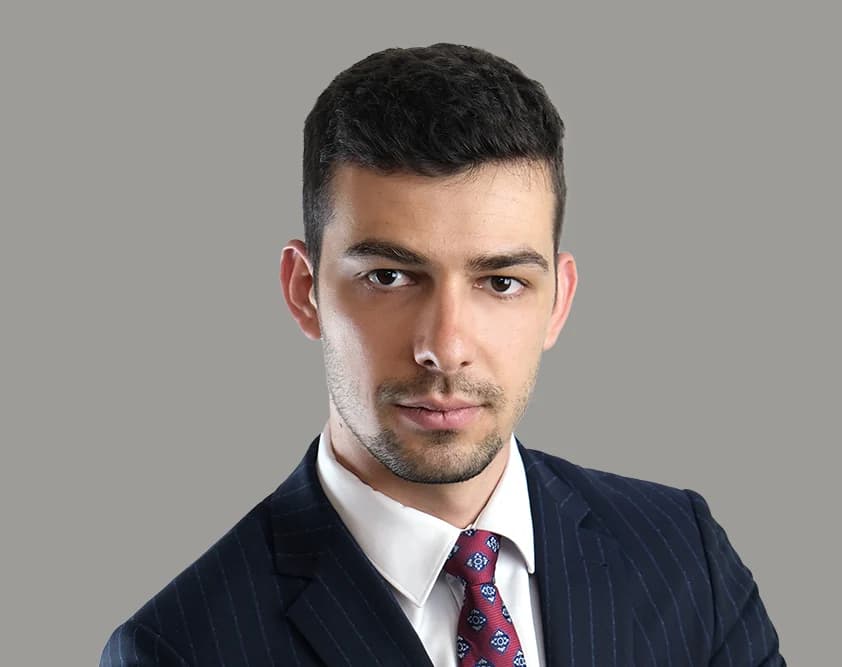
That is exactly why I built AM Legal Services. Over 7 years, I have helped 100+ entrepreneurs from 15+ countries register and grow their businesses in Kosovo. You work directly with me from start to finish. No handoffs, no junior staff.
“I personally handle every client engagement. You'll work directly with me throughout the process. No handoffs, no surprises. If any government application is rejected due to an error on my part, I'll resubmit at no additional cost.”
We've simplified the entire process so you can go from idea to fully operational business.
Tell me about your business goals. I'll recommend the right structure and answer all your questions.
From registration to bank accounts, tax setup to compliance. I do the work while you focus on your business.
Your Kosovo company is fully registered and operational, with a Euro bank account ready to go.
From company registration to ongoing legal support, we cover every aspect of doing business in Kosovo.
Company formation and registration in Kosovo
LLC, branch offices, and corporate structures
Tax registration, VAT compliance, and optimization
Work permits, residency, and visa assistance
Office space, registered addresses, and property
Employee contracts and labor law compliance
Expert court and tribunal representation
Arbitration, mediation, and negotiation
Trademark, copyright, and patent protection
Mergers, acquisitions, and governance
Government permits and regulatory compliance
Compassionate guidance through the process
Europe's best-kept secret for business formation, combining low taxes, Euro currency, and a modern legal framework.
0+
Companies Formed
0+
Countries Served
0-Week
Full Setup
0%
Success Rate
Real feedback from entrepreneurs who trusted us with their business formation.
From registering the company to structuring contracts and advising on tax compliance, he was always one step ahead. We felt more like partners than clients.
Art handled everything remotely from start to finish — business registration with ARBK, VAT setup, fiscal number, and even coordinated the bank account opening. The entire process was seamless despite being handled completely remotely.
What impressed me most was how strategic Art is. He doesn’t just know the law, he knows how to use it to protect and grow your business. His dedication and speed were unmatched.
He demonstrated the highest level of professionalism, integrity, and expertise throughout my case. His attention to detail, clear communication, and strategic approach provided confidence and reassurance.
When you work with the right legal partner, this is what your life looks like.
Not sure if Kosovo is right for your business? Use our free interactive tools to find out.
See exactly how much you'd save with Kosovo's 10% corporate tax and 0% dividend tax.
Try it freeAnswer 4 questions and get a personalized formation package recommendation.
Try it freeSide-by-side comparison of Kosovo vs UK, Estonia, Bulgaria, Cyprus, and more.
Try it freeEverything you need to know about forming a company in Kosovo
Our fees are tailored to your specific business needs. We handle everything from basic company registration to comprehensive formation with accounting and legal consultancy. Contact us for a personalised quote - we are one of the only firms that offer full transparency on pricing with no hidden fees.
Yes. Kosovo allows 100% foreign ownership of companies with no restrictions. There is no requirement for a local partner or shareholder. Foreign entrepreneurs can fully own and control their Kosovo LLC.
We complete company registration within up to 4 weeks. This includes Articles of Association drafting, KBRA filing, company registration certificate, and bank account setup.
Kosovo has a flat 10% corporate tax rate, one of the lowest in Europe. Additionally, there is 0% dividend tax for foreign shareholders, meaning you keep 90% of your profits. VAT is 18% (with an 8% reduced rate for certain goods).
No. The entire process can be completed remotely. We handle all documentation, government filings, and bank account coordination on your behalf. You only need to provide a passport copy and proof of address.
You need a valid passport copy, proof of address (utility bill or bank statement, not older than 3 months), and basic information about your planned business activities. We handle all legal documentation including Articles of Association.
Kosovo is not an EU member state, but it has an EU-aligned legal framework through the Stabilisation and Association Agreement (SAA). Kosovo uses the Euro as its official currency, offers Euro-denominated banking with international transfer capabilities, and benefits from CEFTA free trade agreements for duty-free exports to regional markets.
Yes. Kosovo uses the Euro as its official currency, so your company bank account will be Euro-denominated. Kosovo banks offer Euro transfers across Europe, and some banks provide SEPA-compatible transfers through their EU parent institutions. We assist with the full bank account opening process and KYC documentation.
One misplaced document can derail your business plans. Avoid the risk by working with someone who has done this hundreds of times.
Without proper guidance, you risk losing valuable time and money fixing mistakes that could have been avoided.
Every day you wait is a day someone else seizes the market opportunity you wanted. Time waits for no one.
Trying to navigate Kosovo's bureaucracy alone could lead to costly fines, non-compliance, or even visa denials.
In 15 minutes, I will personally assess your situation, answer your questions, and give you a clear roadmap for your Kosovo company.
150+ entrepreneurs from 15+ countries have already launched in Kosovo
